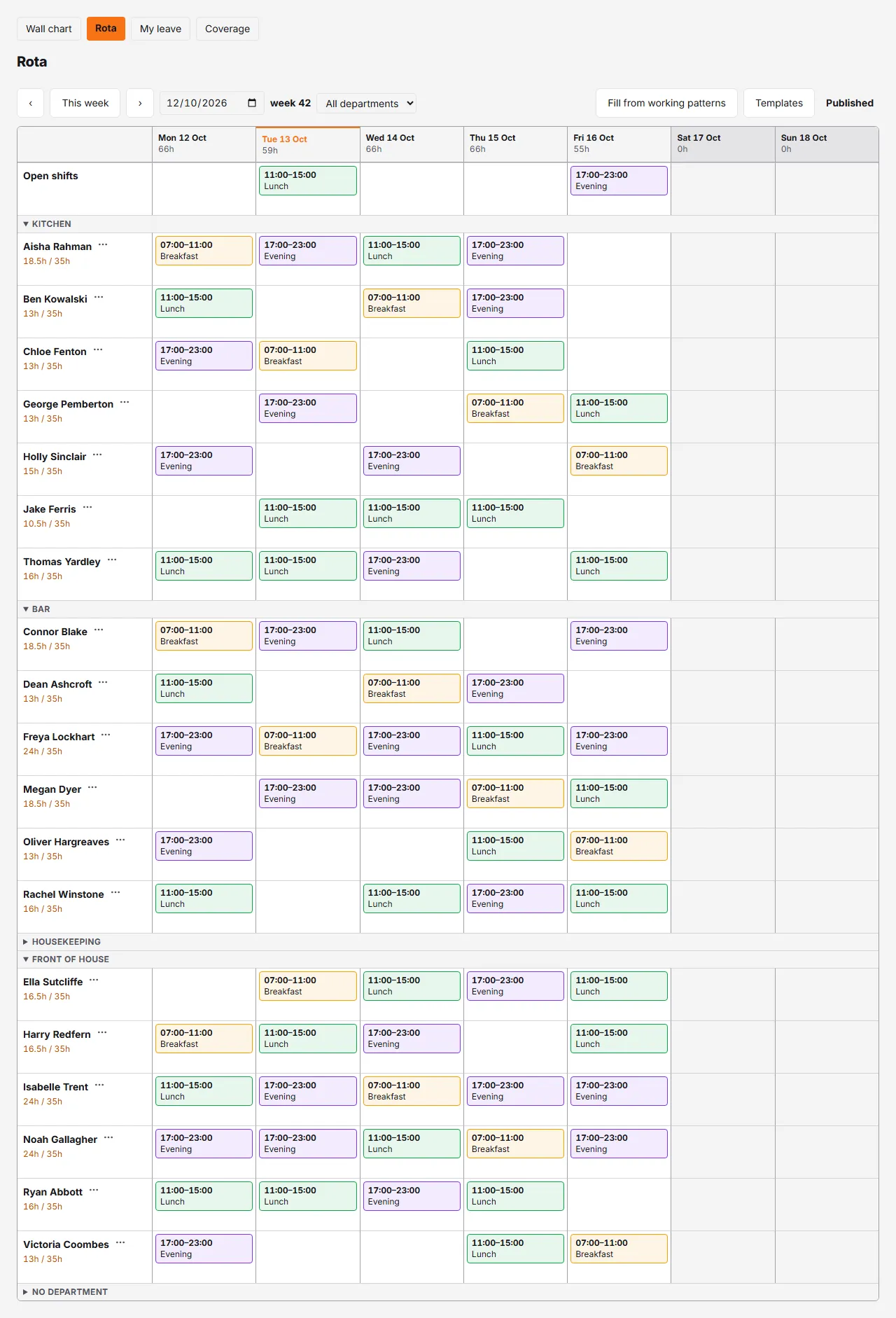
Split shifts on one line
Many pubs send people home between lunch and evening service. In Rotaleave that is two shifts in the same cell: 11-3 and 5-11, each with its own break. Rotaleave refuses a shift that overlaps one the person already has, so a double booking cannot slip in. The paid hours under each name add up both shifts against their contract, so you can see who is short of hours before you publish.
Save Breakfast, Lunch and Evening as shift templates and each one becomes a button. If you plan by area, such as bar, kitchen and floor, a People / Areas switch shows the week either way round.
Closing after midnight, and the 11-hour rule
Type 18:00-00:30 or 6pm-12.30am and Rotaleave reads it back as an overnight shift, on the day it starts. Clocking works the same way: a closer who clocks in at 18:00 and out at 00:40 gets one line on their timesheet, on the day the shift began.
The law still applies after a late close. gov.uk says workers have the right to 11 hours’ rest between working days, and a 20-minute break when they work more than six hours (rest breaks at work). Someone who closes at 00:30 should not be back before 11:30. Rotaleave records each shift’s break, but the person-by-person grid does not check the gap between a close and the next open for you. Look along the closer’s row before you put them on breakfast.
Under-18s behind the bar
If you employ 16- and 17-year-olds, gov.uk sets tighter limits. They cannot work more than 8 hours a day or 40 a week, and they need 12 hours’ rest between working days and a 30-minute break after 4.5 hours (maximum weekly working hours and young workers’ breaks). They cannot work between midnight and 4am. The usual 10pm to 6am bar has exceptions, and gov.uk lists hotel or catering among them (night working hours). gov.uk also says a 16- or 17-year-old can serve alcohol in a restaurant if the licence holder or bar manager has approved the sale (alcohol and young people). If you are not sure an exception covers your pub, ask Acas.
Rotaleave does not hold dates of birth or check these limits. A simple way to stay inside them is a separate shift template that ends by 10pm, used only for younger staff.
Casual and seasonal staff
Bar staff on zero-hours or casual contracts build up holiday as they work. Tick Irregular hours or part-year worker on someone’s settings and their holiday builds up at 12.07% of the hours they work in each pay period. The hours come from approved timesheets, or an admin types them in, and they book their holiday in hours. The zero-hours holiday guide explains the method.
You can put someone on the rota as soon as you invite them, before they have signed in. At the end of the summer, archive them with their last day: they stop counting as a seat straight away, and you can reinstate them next year. Students can mark the days they can’t work, plus one-off dates such as exam weeks. It shows in the list of people who could take a shift, but it never stops you assigning one.
Christmas, match days and the beer garden
gov.uk says employers can restrict when leave is taken, for example at busy periods (booking time off). In Rotaleave that is a blackout period: name the dates, then block requests or just warn. A department limit, such as no more than one person from the bar off at once, sends a request that would break it to a manager with a warning, even for a leave type that is normally approved straight away.
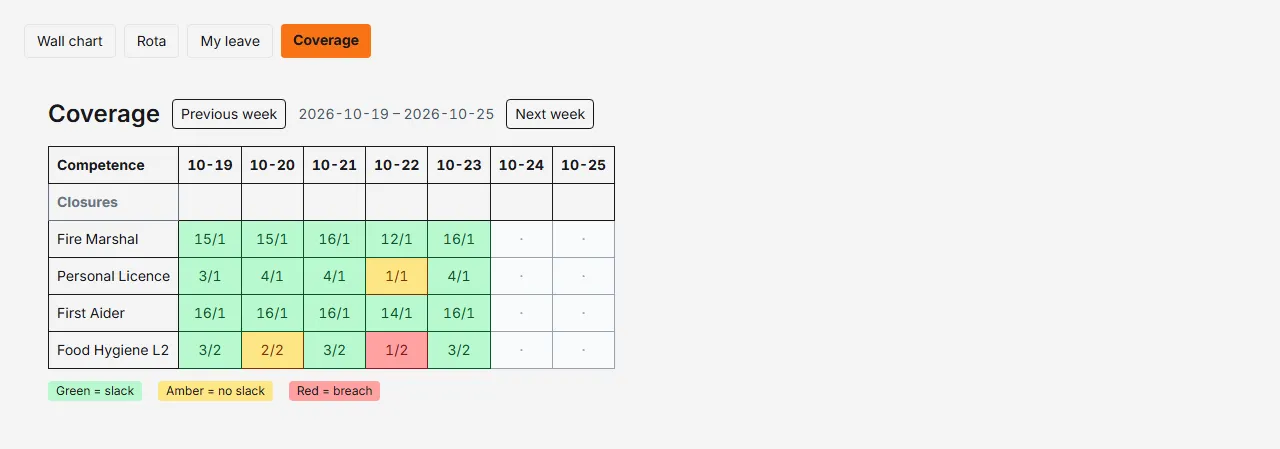
Skills help too. Add skills such as Personal Licence or Food Hygiene, with expiry dates, and set a rule such as at least one personal licence holder working every day, if that is your house rule. Set the rule to block, and when a holiday request would leave you below it the approver sees the gap before saying yes. The coverage board shows each skill day by day, counting people due to work from their working pattern, less approved leave.